
Should wind farm owners in southern Scandinavia fear tornadoes?
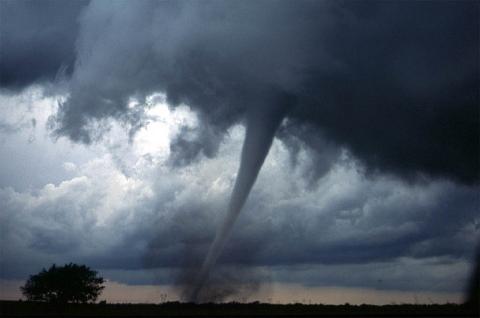
“Can tornadoes harm wind turbines?”
As a weather provider for wind farms in the North Sea and the Danish waters, we have been asked “Can tornadoes harm wind turbines?” This is an interesting question, or a beginning of an interesting discussion. If the question just would be if a tornado could damage a wind turbine, the answer would shortly be yes. As we already at the 3rd level of intensity (named F2) on the tornado scale (called Fujita scale), is talking about ripping apart houses.
Well, we’re luckily situated at our northerly latitudes where very dangerous tornadoes so far have not been observed, but still this does add an interesting angel to the discussion.
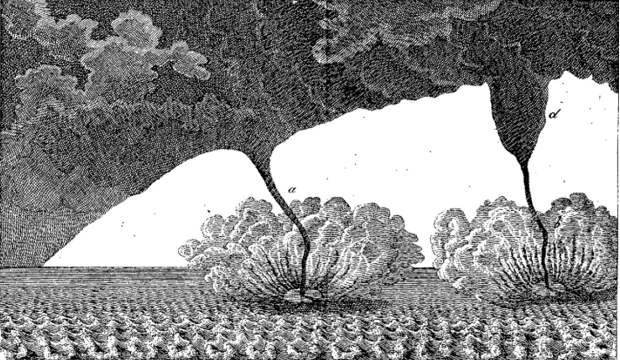
Tornadoes at northern latitudes
Before continuing the discussion, here’s a few quick facts on tornadoes at our latitudes:
- A tornado that forms over water, or moves from land to water, is called a waterspout.
- Tornados and waterspouts are more likely to appear during summer and autumn, since they normally occur in the path of up- and downstream winds in a thundercloud (called cumulonimbus).
- Because of the temperature difference between the sea surface and the atmosphere, the formation and likeliness for thunderclouds over sea is more frequent during summer and autumn.
- The strongest waterspouts move down from a thundercloud to the ground as a spinning tube called a funnel cloud.
- The diametrical size is rather small - about 10-100m.
- Fair-weather waterspouts usually form below developing cumulus clouds and form at the surface and then works its way upwards.
Now we have some facts in place, so let’s continue.
Back in 1962, the 11th of February, the most damaging tornado was registered in Denmark with walls and roofs being ripped off houses. This was ranked as a F1-F2 at Fujita scale. This may, for now, be seen as a once in a life-time event. As tornadoes in this region rarely become a F0 or F1, which means objects can be moved and tree branches brake, we have a statistical problem. Namely, there doesn’t exist adequate observations to determine the number of tornadoes per year for a region, as it is both a very local and very rare phenomenon. It is even worse for waterspouts due to the much fewer observers at sea. However, rough estimates say tornadoes and waterspouts most likely appear about ten times a year or so in southern Scandinavia.
Our conclusion
Even that we don’t know how many tornadoes and waterspouts that yearly occur in our region, it can for now be concluded that the risk of getting hit is very small.
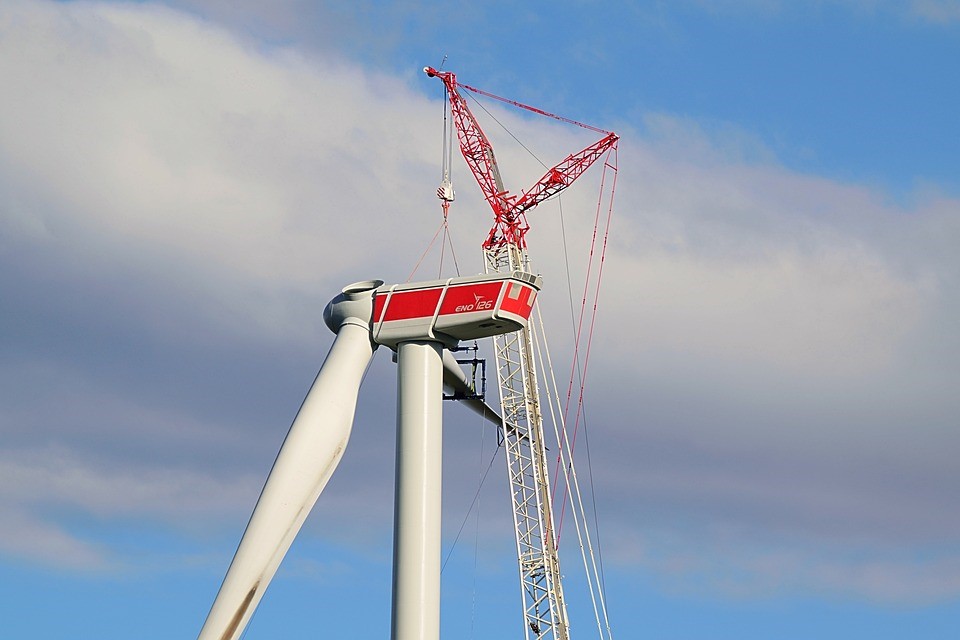
Furthermore, as only one tornado of F2-class has been observed in Denmark, it is even less likely that a wind turbine will be harmed to the extent that it becomes damaged. However, equipment and personnel is more likely to be harmed/dragged away with it or possibly a blade that get over bent.
With all this said, what do we know about the formation of future tornadoes in our climate changing environment? It is said that warmer and more moist weather could create more thunderstorms, but this does not equal that the number of tornadoes will increase, as we still have poor knowledge of how they form.
Now that you’ve read above, you have probably made some thoughts along the way - so what’s your view on tornadoes and waterspouts? Should we be scared, aware or simply not care?
Balance Between Uncertainty
This balance is influenced not only by personal habits but also by the broader environments in which individuals operate, where unpredictability can test both physical resilience and mental composure. Natural phenomena that emerge suddenly, such as localized atmospheric disturbances, offer a parallel to the fragile stability that defines human well being. They remind us that even well designed systems can be exposed to forces that are difficult to anticipate and measure. Within technological and industrial contexts, this awareness translates into a continuous effort to assess risks while accepting the limits of current knowledge. The rarity and unpredictability of certain events create a space where perception and interpretation become as important as measurable data.